
Shade Structure Suppliers In UAE And Dubai



 Send Enquiry
Location : Warehouse no 12, Building 2, 86 First Al Khail, Al Quoz 1
Phone :  04 37...04 3797844

Al Hamra Shades Industries, established in 1996 in Sharjah, UAE, delivers ISO-certified shade structures across the UAE, GCC, and MENA. We provide tur...
Location : Warehouse 1, Behind Safeer Mall, Industrial Area No 7, Al Khan
Phone : 06 53...06 5313822
Mobile :  050 4... 050 4814805

Location : Al Jurf Industrial Area1
Mobile : 054 3... 054 3839003, 050 5050 5773027
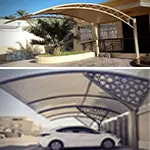
Master tents and shades LLC Shade suppliers and developers are companies that specialize in providing shade solutions for various outdoor spaces. They...


Location : M 37
Phone : 02 55...02 5556266
Mobile : 052 4... 052 4745633

Location : Shop 28, Al Jaziri Bldg, 62 Al Naher St, Deira
Phone : 04 22...04 2248198
Mobile : 056 3... 056 3852953


Location : Al Khayyal Building, Karama
Phone : 050 6...050 6601049
Mobile : 050 6... 050 6601049

Location : M-3, Fatima Building, Al Nabba
Phone : 06 55...06 5528740
Mobile : 050 8... 050 8644948


Location : W/House 17, Opp Royal Marine Shipping, Kalba Road, Industrial Area 17
Phone : 06 55...06 5541771
Mobile : 056 1... 056 1199310
Phone : 06 55...06 5541799
Mobile : 055 2... 055 2046600
Location : 1, First Gulf Bank Bldg, Khalifa St
Phone : 03 75...03 7515400
Mobile : 050 6... 050 6642777
Location : Al Barsha Business Center, Al Barsha 1 Street
Phone : 800 2...800 20377
Mobile : 052 6... 052 6907078
Location : Office 9, Block B, Property # PRP58190, Plot # 6, Al Aras Road, Sanaiya
Phone : 03 72...03 7221220
Mobile : 050 2... 050 2342353
Location : Office # 912H, IBN Battuta Gate Offices, Jebel Ali 1
Phone : 050 2...050 2808065
Location : Shop 12, Abna Rashid Hamd Bin Hwwaidi, Naif, Deira
Phone : 050 7...050 7935713
Mobile : 055 1... 055 1257870
Location : Shed No 2, Al Jadaf
Phone : 04 37...04 3795536
Mobile : 055 7... 055 7325406
About Shade Structures Suppliers
Shade Structures in UAE and Dubai | Balconies | Patios | Pools | Villas | Commercial | Industrial | Solar
| 45°C+Peak Summer Temperature | UV 11+Extreme UV Index (Jun–Aug) | 3,000+Sunshine Hours per Year | 50 km/hShamal Wind Gusts |
Whether you are a homeowner in Jumeirah, a villa owner in Al Ain, a hospitality developer in Yas Island, or a facility manager at a Dubai industrial park, this guide gives you everything you need to choose, specify, install, and maintain the right shade structure for your exact context.
1. Why Shade Structures Are Essential in the UAE
Shade structures are not a luxury in the UAE. They are a functional necessity for any outdoor space that people are expected to use.
1.1 The UAE Outdoor Climate at a Glance
| Climate Factor | UAE Reality |
|---|---|
| Peak temperature | 45°C to 50°C in July–August in Abu Dhabi, Al Ain, and interior UAE |
| UV Index | Regularly reaches 11 (Extreme) and occasionally 12+ during summer midday |
| Solar irradiance | Up to 1,100 to 1,200 W/m2 on horizontal surfaces — among the highest globally |
| Shamal winds | Northwesterly Shamal winds occur June–July, gusting 40 to 70 km/h with dust |
| Humidity | 60% to 90% relative humidity on the Dubai and Abu Dhabi coast during summer |
| Annual sunshine | Approximately 3,000 to 3,500 hours of sunshine per year — more than twice the European average |
| Sand and dust | Periodic haboob (sandstorm) events deposit fine particulate on all outdoor surfaces |
Key Insight — In the UAE, shade structures must be designed for solar radiation intensity, UV degradation, wind-blown sand abrasion, and thermal expansion of metals in the heat — all simultaneously. A shade structure that performs well in Europe or Australia may fail within two seasons in Dubai without UAE-specific material specifications.
1.2 How UAE Building Regulations Affect Shade Structures
The UAE has a layered regulatory framework for outdoor structures. Understanding which authority governs your project is the first step before any purchase or installation:
| Regulatory Body | Role in Shade Structure Approval |
|---|---|
| Dubai Municipality (DM) | Governs building permits for all permanent structures in Dubai. Any shade structure with permanent footings or wall attachment requires a permit submission with engineering drawings. |
| Abu Dhabi City Municipality | Equivalent authority for Abu Dhabi Emirate. Permanent structures above 10 m2 typically require permit and structural engineer stamp. |
| DEWA (Dubai Electricity & Water Authority) | Approval required for any solar shade structure with grid connection in Dubai. Net metering applications are filed through DEWA. |
| Etihad ESCO (Abu Dhabi) | Governs solar energy installations in Abu Dhabi including solar shade canopies for ADDC net metering. |
| Owners Association (OA) | All residential communities managed by an OA (common in Dubai) require NOC before any balcony or villa shade structure modification. |
| Trakhees / PCFC | Governs free zones including Jebel Ali, Port areas — separate permit pathway from Dubai Municipality. |
| Civil Defence UAE | Fire safety approval required for large commercial shade structures over assembly areas, carparks, or buildings. |
Action Required — Before installing any permanent shade structure on a villa, townhouse, apartment balcony, or commercial property in the UAE, always obtain written approval from your Owners Association AND the relevant municipal authority. Non-compliant structures can be subject to removal notices and reinstatement costs.
2. Balcony Shades in Dubai
Millions of Dubai residents live in apartments and have access to a balcony that is functionally unusable from May through September without proper shade coverage. The challenge is that most apartment buildings in Dubai have strict OA rules restricting modifications, and the balcony faces direct west or south-west sun — the most intense solar exposure direction in the afternoon.
2.1 What Shade Structures Are Suitable for a Small Apartment Balcony in Dubai?
The best shade solutions for a Dubai apartment balcony are those that provide genuine UV and heat protection, can be retracted or stored during Shamal wind events, and do not require drilling into or modification of the building facade without approval. Here are the most appropriate options from most to least effective:
Option 1: Motorised Retractable Cassette Awning
This is the gold standard for Dubai apartment balconies where OA permits awning installation. A cassette awning retracts completely into an aluminium housing when not in use, protecting the fabric from Shamal wind and UV degradation when retracted. Key specifications for Dubai use:
- Fabric: solution-dyed acrylic (e.g. Sunbrella or Dickson Marine) — UV-stable, mould-resistant, retains colour for 5 to 8 years in direct UAE sun
- Frame: marine-grade powder-coated aluminium — resists coastal humidity and sand abrasion
- Wind sensor: automatic retraction sensor triggers at 40 km/h — essential for Shamal wind protection
- Summer projection: choose a pitch of 10 to 15 degrees to shed any rare rainfall and maintain fabric tension
- Motor: 240V or 12V DC tubular motor with remote and optional home automation integration
Option 2: Shade Sail on Rail Clamp Anchors (Drill-Free)
For renters or buildings where wall drilling is prohibited, a triangular or quadrilateral shade sail can be tensioned between stainless steel saddle clamps that grip the balcony railing tube. This is a fully reversible, drill-free installation:
- Fabric: 90% to 95% block HDPE knitted mesh — allows airflow while blocking the majority of UV radiation
- Anchoring: 316-grade stainless steel railing clamps at balcony corners, tensioned with stainless D-rings and turnbuckles
- Important: shade sail tension must be re-checked monthly in Dubai as thermal expansion and contraction of metal components affects tensioning over time
Option 3: Freestanding Portable Shade Screen Structure with Weighted Base
A freestanding portable shade screen structure with a ballast base is the most flexible and most renter-friendly option. No fixings, no OA approval, move it as needed:
- Choose a freestanding cantilever umbrella or parasol with a weighted base of 25 kg or more
- Look for a UV-resistant HDPE or olefin fabric canopy with a UPF rating of 50+
- Always take the umbrella down or fold it when winds exceed 30 km/h — weighted bases are not sufficient to resist Shamal-level gusts
Option 4: Bamboo or Aluminium Louvre Screen
For east-facing balconies that receive morning sun only, a lightweight folding bamboo or aluminium louvre panel fixed to the railing provides adequate shade and doubles as a privacy screen. Not suitable for full afternoon western sun exposure.
Dubai Reality Check — West-facing balconies in Dubai receive afternoon sun from 1 PM to sunset — the most intense solar period of the day. A single shade sail or louvre screen on a west-facing balcony may reduce temperature by 8 to 12 degrees Celsius underneath, but will not make the space comfortable in July–August without additional measures such as misting fans or evaporative cooling.
2.2 How Do I Install a Shade Structure on a Balcony Without Drilling?
| Drill-Free Method | How It Works and Limitations |
|---|---|
| Railing clamp system | Stainless 316 saddle clamps grip balcony tubes securely. Rated to 80 kg+ per clamp. Fully reversible. Ideal for shade sails. |
| Tension rod (horizontal) | Spring-loaded pole wedged between side walls — provides an overhead anchor point for fabric without wall penetration. |
| Weighted base parasol stand | 20–40 kg cast iron or water-filled plastic base. Holds a freestanding umbrella up to ~3 m diameter. Must be removed in strong wind. |
| Suction anchor plates | Industrial silicone suction mounts rated for smooth tile, glass, or polished concrete. Each point holds 40–80 kg. Suited for smooth Dubai balcony tile surfaces. |
| Magnetic mounts (metal railings) | Rare earth magnet clamps for ferrous metal railings. Very high holding force. Not suitable for aluminium railings. |
| Freestanding pergola with ballast feet | Modular aluminium pergola with weighted foot pads. Self-supporting, no wall contact. Requires balcony width of minimum 2.5 m. |
2.3 Fabric and Material Selection for UAE Balconies
Material selection is arguably more important than structure type in the UAE. Fabrics and finishes that perform well in mild climates can fail dramatically in Dubai conditions:
| Fabric/Material | Best UAE Application | Expected UAE Lifespan |
|---|---|---|
| Solution-dyed Acrylic | Best for awnings & canopies | 5–8 yr UAE lifespan, best UV colour fastness, mould-resistant |
| HDPE Knitted Mesh | Best for shade sails & screens | 10–15 yr UAE lifespan, excellent airflow, does not absorb water |
| PVC Coated Polyester | Waterproof canopies | 4–7 yr UAE lifespan, heavy, good rain protection, poor airflow |
| Olefin (Polypropylene) | Outdoor cushions & soft canopies | 3–5 yr UAE lifespan, fade-resistant but weakens in sustained UAE sun |
| Polycarbonate (UV filtered) | Translucent roof panels | 10–15 yr, blocks 99% UV, allows light — ideal for pergola roofs |
| PTFE Fibreglass | Commercial & tensegrity structures | 25+ yr, self-cleaning, fire-rated, premium industrial specification |
3. Shade Structures for Villas, Patios, and Gardens in the UAE
UAE villa owners have considerably more freedom than apartment residents when it comes to shade structure installation, but must still navigate Owners Association approvals in gated communities and municipal building permits for permanent structures. The reward for navigating this process is access to a wide range of high-performance shade solutions that can transform an unusable summer garden into a functional outdoor living space.
3.1 Shade Structures for Patios and Outdoor Majlis Areas
The outdoor majlis — an open-sided covered sitting area — is the most culturally important outdoor space in UAE residential architecture. The right shade structure for an outdoor majlis must provide total overhead sun coverage, adequate airflow to allow comfortable sitting at ambient temperature with fan assistance, and a visual aesthetic consistent with the home's architecture. The most appropriate structure types:
Aluminium Louvre Roof Pergola
The motorised louvre pergola is the single most popular premium shade structure solution for UAE villa patios. Adjustable aluminium slat blades rotate from fully open to fully closed, allowing the homeowner to fine-tune the balance between shade, airflow, and rain protection in real time. For the UAE context:
- Blade material: powder-coated marine-grade aluminium 6063-T6 alloy — maintains structural integrity from -10 to +80 degrees Celsius
- Colour: white or light grey exterior to reflect solar radiation and minimise heat absorption into the blade
- Integrated gutter channels: blades drain water to concealed perimeter gutters — allows the louvre to function as a rain cover during winter rains
- Optional side screens: motorised zip screens or fabric side curtains close the sides for privacy and wind protection during Shamal events
- Integrated LED lighting: RGB strip lighting in the blade recesses creates an evening ambiance that is highly valued in the UAE outdoor entertaining context
Tensioned HDPE Shade Sail
Shade sails are the most affordable permanent shade solution for UAE villa patios and gardens. Multiple overlapping triangular or quadrilateral sails can cover a complex outdoor area at a fraction of the cost of a pergola. For UAE installations:
- Fabric density: 95% block rate (UPF 50+) — the UAE's intense UV requires maximum-density shade sails
- Post material: hot-dip galvanized steel or powder-coated aluminium — never raw mild steel in UAE coastal humidity
- Turnbuckle hardware: 316-grade marine stainless steel — standard carbon steel hardware corrodes rapidly in coastal UAE environments
- Post embedment: minimum 800 mm in concrete for typical villa garden conditions — deeper for sandy substrate
Permanent Cantilever Canopy
A cantilever shade canopy uses a single offset post with a cantilevered arm to support a shade covering, keeping the area directly beneath completely free of columns. This is ideal for UAE pool decks and patio areas where circulation space is valued. Key considerations:
- Structural requirement: the offset post must be substantially sized (minimum 150 x 150 mm hollow section steel) to resist the bending moment from the cantilevered load
- Foundation: a properly engineered mass concrete pad footing is essential — undersized footings are the most common cause of cantilever canopy failure
- Cover options: shade cloth, polycarbonate, or aluminium composite panel — polycarbonate is popular in UAE as it provides rain cover during winter rains while admitting natural light
3.2 Translucent Patio Covers vs Solid Covers in the UAE
Many UAE homeowners assume that a translucent polycarbonate patio cover will be cooler than a solid aluminium cover because it looks lighter and brighter. In practice, the opposite can be true if the wrong product is specified:
| Cover Type | UAE Performance Assessment |
|---|---|
| Clear polycarbonate (no UV filter) | AVOID in UAE — transmits up to 90% of UV and creates a greenhouse heat trap underneath. Surface temperatures can reach 70 to 80 degrees C on the top face. |
| Opal/diffused polycarbonate with UV inhibitor | Good choice — diffuses light pleasantly, blocks 99% of UV, surface runs cooler than clear. Multiwall (twin or triple wall) provides additional thermal insulation. |
| Heat-reflective polycarbonate (IR-cut coating) | Best translucent option for UAE — blocks UV and a significant portion of infrared heat radiation. Up to 30% cooler underneath vs standard polycarbonate. |
| Fibreglass translucent panel (GRP) | Durable, UV-stable, lightweight. Popular for industrial and commercial UAE applications. Not as aesthetically refined as polycarbonate for residential use. |
| Solid powder-coated aluminium panel | Maximum shade and heat protection — 100% UV block. Combined with ventilation gaps at ridge, provides excellent performance. Best for western-facing exposures. |
| Aluminium louvre (closed position) | Equivalent to solid panel when closed — fully reversible to open position for ventilation and star viewing at night. |
UAE Tip — For roof-level patio covers in the UAE, always use heat-reflective IR-cut polycarbonate or aluminium panels with a light colour (white or silver). Dark-coloured roofing absorbs solar radiation and re-radiates it as heat downward — making the covered area hotter than the open sun in still conditions.
3.3 Shade Structures for Decks and Rooftop Terraces
Rooftop terraces and elevated timber or composite decks are increasingly common in UAE villas and townhouses. Shade structures for decks at height must account for higher wind exposure and the additional structural considerations of attaching to an elevated slab or deck structure. Critical design requirements:
- Wind design: rooftop structures in Dubai are typically designed for a basic wind speed of 45 m/s (equivalent to approximately 160 km/h) as per UAE Fire and Life Safety Code reference to BS/EN wind loading standards
- Waterproofing membrane protection: deck attachments must not penetrate the waterproofing membrane without a specialist flashing detail — improper penetration is the most common source of water ingress in UAE rooftop installations
- Thermal expansion: aluminium members on a Dubai rooftop can experience temperature swings of 60 to 70 degrees between night and peak day — all connections must accommodate this movement with slotted holes or expansion joints
- Dead load limit: the existing slab structure has a finite load capacity — always verify with a structural engineer before adding a substantial shade structure to a rooftop or elevated deck
4. Poolside Shade Structures in the UAE
A swimming pool without adequate shade is an underused amenity in the UAE. During peak summer, an uncovered pool deck can reach 60 to 70 degrees Celsius at tile surface level — genuinely dangerous for bare feet. Effective poolside shade requires structures that are moisture-resistant, chemically resistant to chlorine and salt water, and designed to allow air movement to support evaporative cooling.
4.1 Best Poolside Shade Solutions for UAE Villas
| Structure Type | Best UAE Poolside Application | Key Benefit and Limitation |
|---|---|---|
| Sail Cloth Shade Structure | Multiple triangular or quad sails over pool deck | Airflow through sail, elegant, minimal footprint of posts. Gaps between sails reduce coverage. |
| Cantilever Canopy | Single post, clear span over lounger zone | Maximum clear deck space. High structural demand on post and footing. Best for one side of pool. |
| Freestanding Aluminium Pergola | Frame over seating area at pool end | Full enclosure option with side screens. Can add polycarbonate roof for rain. Larger footprint. |
| Retractable Awning over Pool Bar | Extends over outdoor kitchen / bar area | Protects BBQ and entertainment zone. Motorised retraction for Shamal winds. |
| Tensegrity Fabric Canopy | Architectural fabric on mast and cables | Dramatic visual statement. Requires structural engineer. Premium cost. 25+ year lifespan. |
4.2 Material Specifications for UAE Pool Environments
The poolside environment in the UAE combines three highly aggressive conditions: UV radiation, chlorinated water splash and mist, and windblown desert sand acting as an abrasive. Material selection for poolside shade structures must address all three:
- Structural frame: powder-coated aluminium 6063-T6 alloy or hot-dip galvanized steel. Avoid standard mild steel even with paint — chlorinated mist degrades paint coatings within 2 to 3 seasons.
- Shade fabric: HDPE knitted mesh rated for pool environments — open-weave to allow airflow, does not absorb water or harbour mould, unaffected by chlorine chemistry
- Tensioning hardware: 316-grade stainless steel throughout — turnbuckles, D-rings, shackles, and anchor bolts. Standard 304 stainless is marginal in pool environments.
- Footings: stainless steel base plates with non-shrink grout on all post bases — prevents moisture ingress under base plate and consequent corrosion
- Polycarbonate panels (if used): UV-stabilised, chlorine-resistant coating. Standard polycarbonate can yellow in pool chemical environments within 3 to 5 years.
Cantilever vs Sail for UAE Pools — A cantilever shade canopy is the superior choice for a compact Dubai villa pool where keeping the entire deck clear of posts is a priority. For larger pools or when budget is a constraint, a well-anchored shade sail array provides excellent coverage at lower cost — but ensure the posts are set well back from the pool edge to allow safe circulation.
5. Commercial Shade Structures in the UAE
The UAE's hospitality, retail, education, and government sectors represent some of the world's most demanding commercial shade structure applications. Dubai's outdoor dining scene, Abu Dhabi's corniche parks, the UAE's hundreds of school playgrounds, and its vast network of industrial facilities all require shade structures engineered to specific performance criteria and maintained to strict standards.
5.1 Translucent Patio Covers and Commercial Shade Structures for Hospitality
Dubai's world-class hospitality sector — from beachside beach clubs to hotel pool decks and rooftop restaurants — uses shade structures as a fundamental part of the guest experience design. Commercial shade structures for UAE hospitality must balance aesthetics, UV performance, wind resistance, and the ability to remain installed through the summer season. The most common commercial applications:
| Hospitality Application | Typical Shade Structure Solution |
|---|---|
| Hotel Pool Decks | Large tensioned PTFE or HDPE membrane canopies over lounger zones, sail arrays over bar areas, and retractable awnings over restaurant terraces |
| Beach Club Day Beds | Individual cantilever parasols with commercial-grade bases (50 kg minimum) plus shade sail arrays as area canopies over seating zones |
| Rooftop Restaurants | Motorised louvre pergolas with integrated heating, lighting, and misting systems for year-round operation |
| Hotel Entrance Canopy | Tensioned fabric or glass canopy over main entrance — architectural statement piece, typically PTFE or laminated safety glass |
| Outdoor Cinema / Event Space | Large-span tensioned membrane structure on engineered masts — spans of 20 to 40 m common in UAE event venues |
| Shopping Mall Exterior | Integrated shade structure over outdoor retail corridors and food court terraces — commercial HDPE or PTFE specification |
5.2 Industrial Shade Structures in the UAE
The UAE has extensive industrial zones — Jebel Ali Free Zone (JAFZA), KIZAD in Abu Dhabi, Sharjah Industrial Area, and dozens of smaller industrial parks across all seven emirates. Industrial shade structures in these environments face the full force of UAE climate extremes plus the additional challenge of industrial process environments:
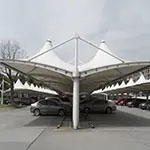
- Car park shade structures: the most common industrial and commercial shade application in UAE. Galvanized pipe or hot-dip galvanized RHS steel frames with HDPE shade cloth. A standard 60x60 shade structure layout covers approximately 36 cars in a double row arrangement.
- Loading dock canopies: protect goods and workers during loading operations from direct sun and occasional winter rain. Typically solid aluminium composite panel or corrugated galvanized steel roofing on steel portal frame.
- Worker rest area shade: UAE Federal Labour Law and MOHRE (Ministry of Human Resources) regulations require shaded rest areas for outdoor workers during the summer midday work ban (15 June to 15 September, 12:30 PM to 3:00 PM). Prefabricated shade structures are commonly used.
- Equipment and material storage shade: HDPE or PVC shade cloth over steel frame protects equipment, vehicles, and raw materials from UV degradation and extreme heat.
UAE Labour Law Note — Under UAE Federal Decree-Law No. 33 of 2021 and the annual MOHRE Ministerial Resolution on summer outdoor working hours, employers are legally required to provide shaded rest areas with water and cooling for outdoor workers. Failure to comply can result in significant fines and work stoppage orders.
5.3 Playground Shade Structures for UAE Schools and Parks
Children's UV exposure during outdoor play is a serious public health priority in the UAE. The Emirates Authority for Standardization and Metrology (ESMA) and Dubai Municipality both reference UV protection requirements for school and park shade structures. An effective UAE playground shade structure specification requires:
- Shade factor: minimum 94% UV block — equivalent to UPF 16 at minimum, with UPF 50+ preferred for maximum protection
- Fabric: HDPE knitted shade mesh, UV-stabilised — manufacturer's stated outdoor lifespan of minimum 10 years in UAE sun
- Frame: hot-dip galvanized steel columns, minimum 100mm diameter, set in 400mm diameter concrete piers to 1.2 m depth
- Clear height: minimum 3.0 m clear at lowest point to prevent collision with climbing equipment and allow adult supervision
- Wind design: minimum 35 m/s design wind speed for Abu Dhabi and Dubai, higher for coastal Fujairah and northern UAE
- Colour: choose lighter fabric colours (sand, cream, white) — absorb less heat and create a cooler environment underneath
5.4 Prefabricated Shade Structures for UAE Commercial Car Parks
The UAE's car-centric urban environment means that shaded parking is one of the most commercially valuable and most commonly specified shade structure applications in the country. A shaded parking space commands a significant rental premium in Dubai and Abu Dhabi. Prefabricated shade structures are the go-to solution for car park projects because they:
- Arrive from the factory pre-engineered and pre-fabricated — no site welding or fabrication required
- Can be installed in phases as budget allows — modular bay-by-bay construction
- Come with manufacturer-supplied structural engineering certification, simplifying the Dubai Municipality permit process
- Use standardised column spacings (typically 5.0 m to 6.0 m bay widths) that align with standard UAE parking bay dimensions
| Car Park Shade Type | UAE Application Context |
|---|---|
| Single cantilever parking shade | One row of columns serving one row of parking on each side — used for perimeter rows or single-row lots |
| Double cantilever parking shade | One central column row serving one row of parking on each side — most efficient structure for open lots |
| Multi-span portal frame | Multiple bays joined together — covers large car park areas, typically used for 60x60 or larger footprints |
| Pyramid or hip roof shade | Architectural form for commercial and hotel car parks — premium aesthetic, higher cost |
6. Solar Shade Structures in the UAE: Shade That Generates Power
The UAE is one of the world's best locations for solar energy. With over 3,000 sunshine hours per year and solar irradiance values consistently above 1,800 kWh/m2/year in Abu Dhabi, a solar shade structure does two things at once: it provides desperately needed shade for outdoor spaces and generates clean electricity that reduces your utility bill. The UAE government has made this financially attractive through net metering programs.
6.1 How Solar Shade Structures Work in the UAE
A solar shade structure replaces the conventional shade fabric or roofing with photovoltaic (PV) solar panels mounted on a tilted frame. The panels absorb direct and diffuse solar radiation and convert it to DC electricity, which is then converted to AC by a string inverter or microinverter. In a DEWA net metering arrangement, excess electricity is fed to the grid and credited to your account.
| 1,800+kWh/m2/yr Solar Resource (Abu Dhabi) | 1,600+kWh/m2/yr Solar Resource (Dubai) | 30%UAE Renewable Energy Target 2030 | AED 0DEWA Export Tariff (net metering credit) |
6.2 DEWA Net Metering and Solar Shade Structures for Dubai Residents
DEWA's Shams Dubai initiative allows residential and commercial customers to install rooftop and structure-mounted solar systems and receive credit for excess generation fed back to the Dubai grid. For solar shade structures specifically:
- System size limits: residential systems up to 200 kW can register for DEWA net metering
- Excess generation credit: credited at the current DEWA production tariff rate against future consumption — rolled forward monthly
- Connection approval: DEWA technical inspection and meter upgrade required before commissioning
- Capital cost: a typical villa carport solar shade structure (10 kW) costs AED 35,000 to AED 60,000 fully installed
- Annual generation: a 10 kW system in Dubai generates approximately 15,000 to 17,000 kWh per year
- Annual bill saving: at DEWA residential tier 1–2 rates, approximately AED 7,000 to AED 12,000 per year
- Simple payback: 4 to 7 years depending on consumption pattern and DEWA tier usage
Abu Dhabi Note — In Abu Dhabi, the Etihad ESCO Shams Abu Dhabi scheme provides a similar net metering framework through ADDC and AADC. Feed-in tariff rates and system size limits differ from DEWA — check the current Etihad ESCO guidelines for Abu Dhabi-specific requirements.
6.3 Are Solar Panel Shade Structures Cost-Effective for UAE Residential Properties?
| Financial Metric | UAE Solar Shade Structure Value |
|---|---|
| Installed cost (10 kW carport solar shade, Dubai) | AED 35,000 to AED 60,000 |
| Annual generation (Dubai solar irradiance) | 15,000 to 17,000 kWh |
| Annual DEWA bill reduction (average villa) | AED 7,000 to AED 12,000 |
| UAE Federal investment incentive | No direct federal subsidy (as of 2025) — benefit is through net metering credits |
| Simple payback period (without battery storage) | 4 to 7 years |
| 25-year net financial benefit | AED 100,000 to AED 200,000+ depending on future DEWA tariff changes |
| Additional benefit: vehicle shade | Shaded parking reduces car interior temperature by up to 30 degrees — significantly extends car battery and upholstery life |
| Property value impact | Solar shade carport is a valued amenity in Dubai villa market — positive impact on resale valuation |
6.4 Agrivoltaic Shade Structures for UAE Agriculture
Agrivoltaics — the simultaneous use of land for solar energy production and agriculture — is a growing area of interest in the UAE as the country pursues food security objectives. In the UAE context, agrivoltaic solar shade structures offer a dual benefit: protecting heat-sensitive crops from the devastating summer sun while generating electricity for irrigation pumps and cooling systems. Research at ICBA (International Centre for Biosaline Agriculture) in Dubai has demonstrated that partial shade from elevated solar panels can actually increase the yield of certain crops in UAE summer conditions by reducing heat stress.
7. Tensegrity and Large-Span Shade Structures in the UAE
At the architectural end of the shade structure spectrum, the UAE is home to some of the world's most ambitious and visually dramatic tensioned membrane shade structures. From the sail-like canopies over Dubai Metro stations to the soaring fabric roofs of Abu Dhabi's cultural institutions, large-span shade structures have become an architectural signature of the UAE built environment.
7.1 Tensegrity Shade Structures: Principles and UAE Applications
A tensegrity shade structure achieves its remarkable spanning capacity by distributing forces through a network of tensioned cables and a minimal number of compression struts. No two rigid members touch — the entire structure is held together by the geometry of tension. In the UAE outdoor context, tensegrity principles are applied in:
- Plaza canopies over pedestrian areas: large PTFE membrane canopies on stainless steel masts and cable nets, spanning 20 to 50 metres without intermediate columns
- Transport infrastructure: Dubai Metro station canopies and bus stop shelters use tensioned fabric as an iconic visual identity element
- Sports facilities: shade canopies over outdoor courts, running tracks, and spectator areas at UAE sporting venues
- Retail and F&B plazas: tension membrane canopies over outdoor dining and retail corridors at UAE malls and mixed-use developments
Engineering Note — Large tensegrity and tensioned membrane shade structures in the UAE must be designed by a licensed structural engineer registered with the relevant emirate authority. Wind tunnel testing is often required for structures spanning more than 20 metres in exposed UAE locations.
7.2 What Design Features Make Large Shade Structures Wind-Resistant in the UAE?
The Shamal wind season in UAE (typically June and July) brings sustained northwesterly winds of 40 to 60 km/h with gusts up to 70 km/h. For a large shade structure covering 60x60 feet or more, these wind loads are enormous. The following design features are used by UAE structural engineers to achieve wind resistance:
- Anticlastic (saddle-shaped) membrane geometry: the opposing double curvature of a hypar surface pre-stresses the fabric so that wind pressure tightens the membrane rather than lifting it — the most fundamental principle of wind-resistant fabric structure design
- High fabric pre-tension: a fabrication pre-tension of 1.5 to 5.0 kN per metre gives the membrane aerodynamic stiffness that prevents flutter and resonance under cyclic wind loading
- Minimal porosity (for rain protection) or maximum porosity (for wind pass-through): zero-porosity PTFE fabric resists wind by providing no gaps; high-porosity HDPE mesh resists wind by allowing it to pass through — the designer must choose the appropriate strategy
- Tapered steel mast design: masts that are wider at the base concentrate bending stress at the footing — more structurally efficient and visually slender
- Helical pile foundations: in the sandy UAE substrate, helical piers provide tension resistance for cable anchors without requiring massive concrete volumes
7.3 60x60 Shade Structures and Large Area Coverage in the UAE
A 60x60 foot (approximately 18 x 18 metre) outdoor area is the typical footprint for a medium commercial car park shade, a large villa garden covering, or a school courtyard shade project in the UAE. The most effective approaches for this scale:
| Solution Type | Structural Approach | Key UAE Advantage |
|---|---|---|
| Multi-bay prefab canopy | 4 bays of 9x18m units | Fastest installation, permit-friendly, modular scalability |
| Tensioned HDPE sail array | 16 triangular sails on 9 intermediate posts | Lowest cost, visual lightness, partial coverage gaps |
| Single span portal frame | 3-bay galvanized steel portal | Maximum solidity, good for industrial/commercial, heavy steel |
| Tensioned membrane on masts | 4 perimeter masts + 1 centre mast | Maximum span, architectural aesthetic, highest unit cost |
| Solar canopy array | Grid of solar panels on tilt frame | Dual function: shade + power generation, DEWA-eligible |
8. Galvanized Pipe Shade Structures and DIY Approaches in the UAE
While most permanent shade structures in the UAE are professionally installed, galvanized pipe shade structures for gardens, plant nurseries, agricultural plots, and small commercial uses are a practical DIY option. Hot-dip galvanized steel pipe is widely available in the UAE through steel fabricators in Al Quoz (Dubai), Mussafah Industrial Area (Abu Dhabi), and Sajaa Industrial Area (Sharjah).
8.1 Building a Galvanized Pipe Shade Structure in the UAE
- Pipe specification: minimum 2-inch Schedule 40 hot-dip galvanized ERW pipe for main columns and beams; 1.5-inch pipe for purlins
- Post depth in UAE desert sand: minimum 900 mm in concrete, deeper in very loose or dune sand — UAE sandy soil provides significantly less lateral resistance than compacted ground
- Concrete specification: minimum Grade C25 (3,600 psi) — UAE summer heat accelerates concrete curing, so use retarder admixture in pours above 35 degrees ambient temperature
- Shade cloth attachment: UV-stabilised polypropylene rope through grommeted shade cloth at 300 mm spacing — stainless steel zip ties as alternative
- Anti-corrosion maintenance: inspect galvanizing every 2 years — touch up any scratches with cold galvanizing compound before rust takes hold
UAE Ground Note — In UAE coastal areas (Dubai marina, Abu Dhabi corniche, Ajman coast), salt spray and high humidity create a severely corrosive environment for steel. In these locations, use hot-dip galvanized PLUS powder-coated steel, or switch entirely to marine-grade aluminium for structural frames. Galvanizing alone is not sufficient within 500 m of the sea in UAE conditions.
8.2 PVC Pipe Shade Structures for UAE Gardens and Farms
PVC pipe is widely used for smaller agricultural and garden shade structures across the UAE — particularly in the northern emirates' farming communities and Al Ain's agricultural areas. PVC Schedule 40 (20 mm to 63 mm diameter) is available throughout UAE hardware stores. For UAE conditions:
- UV degradation caution: standard grey PVC becomes brittle in UAE sun within 2 to 4 seasons — use UV-stabilised (black or dark brown) conduit PVC for any above-ground exposure
- Thermal expansion: PVC expands significantly in UAE summer heat — allow 6 to 8 mm per metre of run for expansion joints in runs longer than 3 metres
- Shade cloth percentage for UAE agriculture: 30% for sun-tolerant crops (tomatoes, peppers in winter), 50% for leafy greens and herbs, 70% for seedling propagation and shade-loving crops
9. Maintenance and Longevity of Shade Structures in UAE Conditions
The UAE's extreme climate is the primary reason why shade structures fail prematurely. Understanding the degradation mechanisms and implementing a proactive maintenance schedule significantly extends the useful life of any shade investment.
9.1 Common Failure Modes for UAE Shade Structures
| Failure Mode | Cause and Prevention |
|---|---|
| UV fabric degradation | Colour fading and loss of tensile strength in shade cloth, awning fabric, or polycarbonate panels. Most common failure mode. Prevented by specifying UV-stabilised materials from the outset. |
| Corrosion of steel components | Rust in coastal zones, chlorinated pool environments, or industrial chemical exposure areas. Prevented by galvanizing + powder coating, marine-grade aluminium, or 316 stainless hardware. |
| Shamal wind damage | Tearing of fabric at stress concentration points (corners, eyelets), bending of inadequately braced poles, foundation pull-out. Prevented by correct wind design and regular pre-season tensioning checks. |
| Thermal expansion joint failure | Cracking of polycarbonate panels at fixed ends, loosening of bolted connections. Prevented by slotted expansion holes and seasonal connection torque checks. |
| Sand and dust abrasion | Micro-abrasion of polycarbonate surfaces reduces light transmission. Surface cleaning with clean water and soft cloth (not dry wiping) is essential. |
| Footing settlement in sandy soil | Column lean or displacement in very loose desert sand. Prevented by adequately sized concrete piers and, in extreme cases, driven or helical pile foundations. |
9.2 Recommended Maintenance Schedule for UAE Shade Structures
| Frequency | Task | Notes for UAE Conditions |
|---|---|---|
| Monthly | Fabric inspection | Check for tears, abrasion, mould at drainage points. Clean with dilute mild soap solution. |
| Monthly | Hardware check | Inspect turnbuckles, shackles, and connection bolts for signs of corrosion or loosening. |
| Pre-summer (April) | Full structural inspection | Tighten all connections, replace worn fabric sections, check footing stability. |
| Pre-Shamal (May–June) | Wind preparation | Retract all retractable structures, increase fabric tension on sails, remove temporary shade screens. |
| Post-Shamal (August) | Damage assessment | Inspect for wind-induced stress on fabric and connections, replace as needed. |
| Annual | Polycarbonate cleaning | Clean with low-pressure water and soft cloth — do not use abrasive cleaners or dry wipe. |
| Every 5 years | Full refurbishment | Replace shade fabric, re-galvanize or re-powder coat steel frame, replace all tensioning hardware. |
10. Shade Structure Cost Guide for the UAE
Pricing for shade structures in the UAE varies considerably based on emirate, location (coastal vs inland), material specification, supplier type (local fabricator vs international brand), and installation complexity. The figures below are indicative ranges based on the UAE market as of 2024–2025.
10.1 Residential Shade Structure Costs — UAE
| Shade Structure Type | Approximate UAE Cost | Notes |
|---|---|---|
| Small balcony shade sail (drill-free) | AED 500 to AED 1,500 | Includes sail, railing clamps, hardware |
| Motorised retractable awning (3 m) | AED 3,000 to AED 8,000 | Supply and install, fabric and motor |
| Villa patio pergola (aluminium, 4x4 m) | AED 4,000 to AED 10,000 | Non-motorised louvre or fixed pergola |
| Motorised louvre pergola (5x4 m) | AED 12,000 to AED 35,000 | Premium motorised, side screens optional |
| Shade sail villa garden (4 sails) | AED 3,000 to AED 8,000 | HDPE sails + galvanized posts + concrete |
| Cantilever pool canopy (3x4 m) | AED 6,000 to AED 15,000 | Steel offset post, HDPE or polycarbonate |
| Solar carport shade (10 kW, 4 cars) | AED 35,000 to AED 60,000 | Includes panels, inverter, DEWA application |
10.2 Commercial Shade Structure Costs — UAE
| Application | Approximate UAE Cost Range | Notes |
|---|---|---|
| Car park shade (10 bays, galvanized) | AED 15,000 to AED 35,000 | Per 10 standard bays, HDPE shade cloth |
| Car park shade (10 bays, solar) | AED 60,000 to AED 120,000 | Includes solar panels and inverter system |
| School playground shade (200 m2) | AED 30,000 to AED 60,000 | Engineered, galvanized, UPF 50+ fabric |
| Commercial restaurant terrace | AED 20,000 to AED 80,000 | Depends on motorised/louvre/fabric spec |
| Large tensioned membrane (500 m2) | AED 150,000 to AED 400,000 | Engineered PTFE or HDPE, mast and cable |
| Industrial yard shade (1000 m2) | AED 80,000 to AED 200,000 | Heavy galvanized steel portal, HDPE cloth |
Pricing Note — All prices are indicative AED ranges for the UAE market (2024–2025). Actual quotations will vary based on site conditions, material specifications, and contractor. Always obtain a minimum of three competitive quotes from registered UAE contractors for any project above AED 10,000.
11. Choosing the Right Shade Structure Supplier in the UAE
The UAE market has hundreds of shade structure suppliers ranging from small local fabricators in industrial areas to regional branches of international manufacturers. Knowing how to evaluate and select the right supplier for your project is as important as selecting the right structure type.
11.1 What to Look for in a UAE Shade Structure Supplier
- Trade licence: the supplier should hold a valid UAE Trade Licence with a scope that covers shade structure supply and installation. Verify on the relevant emirate's e-services portal.
- Engineering capability: for permanent structures, the supplier should either employ or work with a UAE-registered structural engineer who can produce stamped drawings for municipal permit submission.
- Material certification: ask for test certificates for shade fabric (UV transmittance, tensile strength), steel galvanizing thickness, and powder coating adhesion.
- Portfolio and references: request examples of comparable projects in UAE conditions — specifically ask about projects that have been through at least two summers.
- Warranty terms: fabric warranties of 5 to 10 years and structural warranties of 10 to 20 years are available from quality suppliers. Get warranties in writing.
- After-sales maintenance: UAE shade structures require periodic maintenance — a supplier who offers a maintenance contract is preferable to one who does not.
Shade Structures Companies in UAE
- Valor Metal Industries LLC, Sharjah, Contact:
- The Shading Company LLC, Dubai, Contact: 04-3797844
- Al Hamra Shades Industries Co LLC, Sharjah, Contact: 06-5313822
- Al Muzalaat Building Maintenance LLC, Ajman, Contact:
- Master Tents and Shades LLC, Dubai, Contact:
- Cover General Contracting & Maintenance SP LLC, Abu Dhabi, Contact: 02-5556266
- Mufaddal Shabbir Building Material Trading LLC, Dubai, Contact: 04-2248198
- Star Tents Technical Contracting LLC, Dubai, Contact: 050-6601049
- Ardh Al Arab Tents and Sheds Fix LLC, Sharjah, Contact: 06-5528740
- Pinnacle Prime Technical Services LLC, Dubai, Contact:
Featured Companies
 North Group is a green company that provides eco-friendly, long-lasting and high-quality products and solutions for the construction sector through its North Construction Chemicals products.
North Group's brand portfolio includes products for adhesives, sealants, flooring, tiling, waterproofing, and construction chemicals.
North Group provides complete construction solutions including advice, training, and site support through its products and brands, including RepairPro, TilePro, AquashieldPro, FloorPro, AnchorPro, BondPro, SealPro, PlasterPro, ShieldPro, WallPro, and ShieldPro.
North Group is a green company that provides eco-friendly, long-lasting and high-quality products and solutions for the construction sector through its North Construction Chemicals products.
North Group's brand portfolio includes products for adhesives, sealants, flooring, tiling, waterproofing, and construction chemicals.
North Group provides complete construction solutions including advice, training, and site support through its products and brands, including RepairPro, TilePro, AquashieldPro, FloorPro, AnchorPro, BondPro, SealPro, PlasterPro, ShieldPro, WallPro, and ShieldPro. One of the leading supplier and stockists of Building Materials, Sanitary-wares & Cleaning Products. Phone: 06-5344246, Email: [email protected]