
Castors And Wheel Suppliers In UAE | Castor Wheels In Dubai

Tente, Emes, Blickle, Skk, Uken, RS PRO - Castor Wheel Manufacturers
Explore top caster wheel suppliers in UAE and Dubai, featuring manufacturers such as Tente, Emes, Blickle, Skk, Uken, RS PRO. This page provides comprehensive information on suppliers and dealers offering a wide range of caster wheel solutions for all applications.

Location : Nad Al Hammar, Ras Al Khor
Phone :  04 88...04 8855001
Mobile :  05022... 0502278785


 Send Enquiry
Caster Wheel Suppliers UAE
Discover a wide selection of industrial caster wheels designed for smooth mobility in warehouses, factories, and logistics centers.Available in swivel and fixed configurations with heavy-duty load ratings from 100kg to 2000kg.
Best Industrial Caster Wheel Suppliers UAE
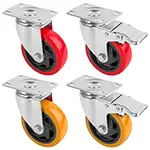
Ideal for UAE-based industries looking for long-lasting, vibration-resistant rolling solutions.Caste Wheel suppliers deliver across Dubai and Abu Dhabi offer fast delivery, mounting hardware, and load calculation support

Location : Warehouse No 2, Near Ocean Rubber Factory, Industrial Area 15
Mobile : 055 4... 055 4625252, 054 9054 9945332

Rubber Caster Wheels Suppliers Sharjah
Rubber caster wheels offer floor protection and noise reduction, ideal for schools, hospitals, and offices.Caster Wheel suppliers in Sharjah stock a variety of treads and diameters for different floor types and surfaces.
Polyurethane Caster Wheel Suppliers Sharjah
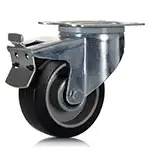
Polyurethane caster wheels deliver higher load capacity, abrasion resistance, and chemical stability, perfect for industrial settings.Choose from shock-absorbing or non-marking designs with brake options for safety.

Location : B-506, Bel Rashid Twin Towers, Al Qusais 3
Phone : 04 25...04 2558915
Mobile : 052 3... 052 3016075


Location : Near Emirates Gas Co, New Indl Area
Phone : 06 74...06 7433543
Mobile : 050 6... 050 6628727
Stainless Steel Casters Suppliers Ajman
Stainless steel casters are corrosion-resistant, making them perfect for food-grade, pharmaceutical, and marine use in the UAE.Available in chrome-plated and SS304/SS316 variants with various stem and plate fittings.
Furniture Casters Suppliers Ajman
Furniture caster wheels provide silent mobility and ease of movement for chairs, desks, and storage units.Furniture Caster suppliers in Ajman offer bulk pricing for OEMs and custom caster mounting options.

Location : 311, Metro Centre Building, Naif Rd, Deira
Phone : 04 22...04 2275312
Mobile : 056 1... 056 1780786
Trolley Wheel Suppliers Dubai
Trolley wheels ensure stable and safe load transport in factories, hotels, and supermarkets.Ideal for high-heat and chemical-prone environments in Sharjah-based industrial zones.
Nylon Caster Wheels Suppliers Dubai
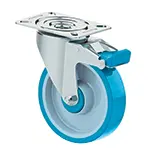
Nylon caster wheels offer high wear resistance, low rolling resistance, and thermal stability.Nylon cater wheel suppliers has stock availability, weight ratings, and noise-dampening options.

Location : Shop 8, Nakheel Plaza, Nakheel Rd, Deira
Phone : 04 22...04 2294722
Mobile : 055 8... 055 8814352

Location : 24A, 37A, Al Quoz Industrial Area 1
Phone : 04 32...04 3237306
Mobile : 052 2... 052 2955253

Location : Office 4, Ground Floor, Sector 10, M-9, Mussafah
Phone : 02 55...02 5540080
Mobile : 058 2... 058 2700998
Caster Wheel Manufacturers UAE
Direct access to UAE-based caster wheel manufacturers ensures faster lead times and price efficiency.Widely used in heavy equipment, construction carts, and military-grade trolleys.
Forged Steel Caster Wheels Dealers UAE
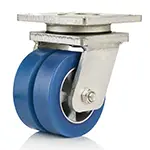
Forged steel caster wheels are built for extreme loads, rugged floors, and shock-impact scenarios.Caster wheel suppliers offer customized brackets, MRO-friendly fittings, and technical load testing.
Location : Shop 10, Tawakkal Building, Near Royal Mount Hotel, Al Sabkha Street
Phone : 04 22...04 2237087
Mobile : 055 8... 055 8848352
Caster Wheels Replacement UAE
Easily replace worn-out caster wheels with compatible, high-load replacements for carts, platforms, and racks.Caster Wheel dealers provide repair kits, wheel-only options, and bulk pricing for maintenance teams.
Twin Wheel Caster Suppliers
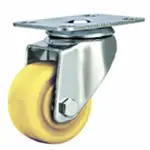
Twin wheel casters offer increased load distribution and directional stability.Twin wheel casters are available in hard rubber, PU, and nylon materials with top-plate or threaded-stem mounting.
Location : Industrial Area 10
Phone : 06 54...06 5432704
Mobile : 052 6... 052 6921734
Swivel Rubber Caster Wheel Suppliers UAE
Swivel casters provide 360° movement, ideal for navigating tight warehouse or office spaces.Rubber options ensure smooth and silent rolling, even on tile and epoxy floors.
Fixed Casters Suppliers
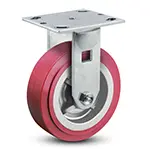
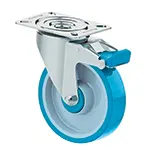
Fixed casters offer directional rigidity, used in tandem with swivel units for straight-line control.Sharjah-based supplier offer dual-locking systems and corrosion-resistant hardware.
Location : 8, Persia N-12, Bhnd Dragon Mart, Cluster, Intl City
Phone : 04 45...04 4542688
Mobile : 055 2... 055 2643768
Anti-Static Caster Wheels Dealers UAE
Anti-static casters are engineered for ESD-sensitive areas like electronics assembly lines and labs.Prevents charge build-up that could damage circuit boards or sensitive components.
Heavy Duty Caster Wheel for Industries
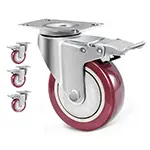
Heavy-duty caster wheels support loads of up to 5 tons, ideal for transport systems and large machinery.Suppliers offer compliance with ISO/IEC 61340 ESD standards and custom fabrication support.
Location : Ground Floor, China Optical Centre, Nasser Square, Deira
Phone : 04 22...04 2211606
Location : Near Sharjah Co-operative Society
Phone : 06 52...06 5283639
Location : 33, Mega Stores, Behind KM Trdg, Mussafah 4
Phone : 02 55...02 5578887
Mobile : 055 2... 055 2212069
Location : Bhnd Habib Bank AG Zurich, Nasr Square, Deira
Phone : 04 22...04 2216713
Location : Hardware Market, Deira
Phone : 04 22...04 2270077
Mobile : 055 6... 055 6058252
Location : Unit 11, University City Road, Industrial Area 12
Phone : 06 53...06 5313538
Mobile : 055 9... 055 9993656
Location : Shop No 41, Naif Bazaar Building, 16 B Street, Naif, Deira
Phone : 04 25...04 2503751
Mobile : 054 4... 054 4438253, 052 1052 1042736
Location : M-3, Merrit Saloon Bldg, Bhnd Juma Al Majid, Electra St
Phone : 02 64...02 6455205
About Castors And Wheels Suppliers
Castor Wheels in UAE
Castor wheels are essential components that facilitate the mobility of various equipment and furniture. In the UAE, a diverse range of caster wheels is available to cater to different industrial, commercial, and residential needs. Castor wheels in the UAE play a critical role in keeping warehouses, factories, hospitals, hotels, supermarkets, and workshops moving efficiently. From material handling trolleys in Jebel Ali warehouses to food-service carts in Dubai hotels, the right caster wheel reduces manual effort, prevents floor damage, and improves safety. Castor wheel suppliers in the UAE provide a wide portfolio covering light-duty swivel wheels for office furniture, medium-duty casters for supermarket trolleys, and heavy-duty industrial casters for machinery and fabrication units.
Castor and Wheel in UAE | Caster and Wheels Near Me
This guide covers the list of Castor and Wheel Suppliers in UAE catering different types of Caster and Wheel supplies built using forged steel and stainless steel castor and wheel to motorized and steered castor wheel systems that clears the buyers every critical queries they have backed by authoritative technical data.
Understanding Wheels and Castors | Castor and Wheels for Industrial Applications
A castor is a wheeled device attached to the base of an object to enable it to be moved across a floor surface. Castors combine a wheel which rolls with a mounting assembly that connects to the load-bearing equipment. The combination of the right wheel material, bearing type, and mounting configuration determines suitability for a given application, floor type, and load requirement. Castor and Wheel in the UAE play a critical role in keeping warehouses, factories, hospitals, hotels, supermarkets, and workshops moving efficiently. From material handling trolleys in warehouses to food-service carts in Dubai hotels, the right caster wheel reduces manual effort, prevents floor damage, and improves safety.
Swivel vs. Fixed Castors | Castor and Wheels in Dubai
The first and most fundamental distinction in industrial wheels and castors is between swivel and fixed types - Swivel castors allow 360° rotation, enabling maneuverability in tight spaces. The wheel assembly rotates around a vertical axis above the wheel, allowing directional changes without lifting. They are essential for trolleys, carts, and equipment requiring frequent direction changes while Fixed castors (also called rigid castors) only allow forward and backward motion along a single axis. They provide better straight-line stability and are typically used in combination with swivel castors — two fixed at the back and two swivel at the front of a trolley is the standard configuration.
What is the difference between swivel and fixed castors for industrial trolleys?
Swivel castors allow full 360° rotation and are used at the front of a trolley to enable steering and directional changes. Fixed castors, positioned at the rear, maintain straight-line directional stability and prevent unwanted lateral drift under load. A standard 4-castor trolley configuration uses 2 swivel castors at the front and 2 fixed castors at the rear. For heavy-duty industrial trolleys carrying over 1,000 kg, all-swivel configurations with locking mechanisms provide maximum flexibility while braked castors ensure safe stationary parking.
Wheel Materials: Matching to Floor and Load
The wheel material is the single most important factor affecting floor protection, noise, rolling resistance, and load capacity. The primary categories are:
- Polyurethane (PU) wheels: Best for hard, smooth floors (concrete, epoxy, tile). Excellent load capacity, low rolling resistance, good floor protection, and resistance to oils and chemicals. The preferred choice for most warehouse and logistics applications.
- Rubber wheels: Softer and quieter, rubber absorbs vibration and is kinder to delicate floors. However, rubber has lower load capacity than PU, is susceptible to oils and solvents, and may leave marks on certain floor finishes. Preferred where noise reduction is critical.
- Nylon wheels: Extremely hard and durable, capable of high loads, but can damage floor surfaces and produce noise on hard floors. Ideal for rough terrain, outdoor use, or where floors are not a concern.
- Stainless steel castor wheels: Used where hygiene, chemical resistance, and high-temperature resistance are paramount — food processing, pharmaceutical production, and medical environments.
- Cast iron wheels: For extremely high-temperature environments (furnace areas, foundries).
What floor types are best suited for polyurethane vs rubber heavy duty castor wheels?
Polyurethane castor wheels are ideal for sealed concrete, epoxy-coated floors, ceramic tiles, and smooth warehouse flooring. They combine high load capacity (up to 1,000 kg+ per wheel for industrial grades) with excellent floor protection and low rolling resistance. Rubber castor wheels are better suited for sensitive floors such as vinyl, linoleum, parquet, and finished hardwood, where vibration absorption and silence are priorities. Rubber is also preferred in environments where noise levels must be minimised. For uneven or outdoor surfaces, pneumatic (air filled castor wheels) or foam filled castor wheels are the best choice, as their compliance absorbs surface irregularities.
How do I prevent industrial castor wheels from leaving marks on epoxy floors?
To protect epoxy floors, use polyurethane castor wheels rather than nylon or rubber. Polyurethane is non-marking and does not chemically react with epoxy coatings. Ensure wheels are clean and free of embedded grit or metal particles, which act as abrasives. Avoid low-quality rubber wheels with carbon-black formulations, which can transfer black streaks. For painted or coated floors, a Shore A hardness of 80–92 in polyurethane provides an optimal balance of load capacity and surface protection. Inspect wheels regularly for flat spots caused by prolonged stationary loading — flat-spotted wheels cause impact marks with every rotation.
Industrial Castors and Wheels by Design
Forged Steel Castors
Forged steel castors are made by reshaping hot steel under extreme pressure, that aligns the steel's grain pattern and results in an object that is much stronger than comparable cast steel or manufactured substitutes. In specialized crane and gantry applications, the end product is a castor bracket and wheel assembly that can support loads ranging from 2,000 kg to over 50,000 kg per unit.
Steel mills, shipbuilding yards, heavy press shops, large-scale storage racking systems, and industrial plant maintenance are some of the principal uses for forged steel castors. When choosing forged steel castors, be sure to include the floor surface to choose the right wheel tread material, the bearing type (tapered roller bearings are usual for heavy loads), and the load rating in kilograms (not only wheel diameter).
Reinforced Castor Wheels
Reinforced castor wheels APPLY composite construction - nylon or polyurethane tread bonded to a reinforced nylon, pressed steel, or cast iron centre. The reinforcement of the wheel centre (rather than the tread) dramatically increases the load capacity without sacrificing floor protection. Reinforced castor wheels are the standard choice for medium-to-heavy-duty industrial trolleys, roll cages, pallet trucks, and storage systems carrying 300–1,000 kg per castor.
Industrial Grade Swivel Castors
Industrial grade swivel castors are distinguished from light-duty swivel castors by their construction: pressed or fabricated steel housings (not stamped sheet metal), precision sealed ball bearings or taper roller bearings in the swivel head, and hardened axle pins. The swivel offset — the horizontal distance between the vertical swivel axis and the centre of the wheel — determines castor tracking. A correctly calculated swivel offset (typically 25–50% of the wheel radius) ensures the castor self-aligns in the direction of travel without excessive shimmy.
What load capacity should I look for in heavy duty industrial castor wheels?
Heavy duty industrial castor wheels are rated to carry from 500 kg up to 5,000 kg per castor depending on wheel diameter, material, and construction. As a general guideline: 200 mm diameter PU castors typically carry 600–900 kg; 250 mm diameter castors 1,000–1,500 kg; 300 mm diameter forged steel castors 2,000–4,000 kg. Always apply a safety factor of at least 1.5–2x the calculated working load per castor. Also account for dynamic loads (impact, acceleration) which can be 2–3x the static load in industrial environments.
What is the difference between light duty and heavy duty castors for industrial use?
Light duty castors use stamped steel or nylon brackets, plain bearings or simple ball races, and carry up to 100–150 kg per castor. They are appropriate for office furniture, light catering trolleys, and retail display units. Heavy duty castors feature fabricated or forged steel brackets, precision sealed double ball bearings or taper roller bearings in both the wheel and swivel head, heat-treated axle pins, and load ratings from 300 kg to several tonnes per castor. They also differ in the thickness of wheel tread, resistance to side loading, and service intervals. For any application in a warehouse, workshop, or industrial facility, always specify industrial grade swivel castors rated for the intended load with a minimum 25% safety margin.
How do I calculate the total load capacity needed across 4 industrial castor wheels?
The correct method is: Total equipment weight (including maximum payload) ÷ Number of castors × Safety factor. For example, if a trolley with maximum load weighs 1,200 kg and uses 4 castors: 1,200 ÷ 4 = 300 kg per castor working load. Apply a safety factor of 1.5: 300 × 1.5 = 450 kg minimum load rating per castor. In practice, always round up to the next standard castor load rating. Note: in practice, loads are rarely perfectly distributed — uneven loading means some castors carry more than others, which is why safety factors of 1.5 to 2 are essential in industrial applications.
Stainless Steel Castor Wheels
Stainless steel castor wheels are built using grade 304 or 316 stainless steel brackets and axles, featured with wheel treads in stainless steel, rubber, or polyurethane for versatile application. A Perfect choice for food processing facilities, pharmaceutical production, medical and surgical environments, clean rooms, and any application where hygiene, resistance to cleaning chemicals (including bleach and strong acids), and corrosion resistance are non-negotiable.
Grade 316 stainless steel provides superior resistance to chloride corrosion compared to 304 — critical in coastal UAE locations or where saline cleaning solutions are used. Ensure that all components including fasteners, wheel axles, and bearing housings are stainless steel; mixed-metal assemblies corrode at the dissimilar metal junction.
Castor Wheel with Foot Brake
Castors with foot brakes incorporate a lever-operated mechanism that locks either the wheel rotation, the swivel action, or both simultaneously (the latter is called a 'total lock' or 'directional lock' brake). Braked castors are essential for any equipment that must remain stationary during use — medical carts, laboratory trolleys, industrial workstations, and scaffolding. Foot brakes are available in thermoplastic or reinforced nylon and cast steel and IEC 60601-1:2012 standard compliance.
Castor Mounting Types: Bolt Holes, Stems, and Plates
Threaded Stem Castors (Wheels and Castors Threaded Stem)
Threaded stem castors (also called screw-in castors or wheels and castors screw in) use a threaded bolt projecting from the top of the castor bracket, which is inserted into a threaded socket or nut welded into the equipment frame. They are the most common mounting type for furniture, light trolleys, and equipment with tubular legs.
| Specification | Detail |
|---|---|
| M8 Thread | Pitch 1.25 mm — For light loads up to 50 kg per castor; standard for furniture and light trolleys |
| M10 Thread | Pitch 1.5 mm — For medium loads 50–150 kg per castor; common in catering and retail equipment |
| M12 Thread | Pitch 1.75 mm — For heavy loads 150–300 kg per castor; standard for industrial equipment frames |
| M16 Thread | Pitch 2.0 mm — For very heavy loads 300–600 kg; specialist industrial applications |
What is the standard thread pitch for M8, M10, and M12 threaded stem castors?
The standard (coarse) thread pitches for metric threaded stem castors are: M8 = 1.25 mm pitch, M10 = 1.50 mm pitch, M12 = 1.75 mm pitch. These are ISO metric coarse thread standards (ISO 261/ISO 724). Fine thread variants exist (e.g. M12 × 1.25) but are less common in castor applications. Always verify the thread pitch of the receiving socket in the equipment frame before ordering replacement castors — installing a castor stem with the wrong pitch will damage the thread on the first turn. For replacement castors, measure both the thread diameter and pitch with a thread gauge or caliper.
How do I stop threaded stem castors from loosening over time with vibration?
Vibration loosening of threaded stem castors is a common problem in industrial environments. The most reliable solutions are:
- Apply medium-strength thread-locking compound (e.g. Loctite 243) to the stem before installation — this resists loosening from vibration while still allowing removal with standard tools.
- Use a locking nut (nyloc nut) above the castor mounting plate.
- For castors mounted in threaded sockets in tubular legs, ensure the socket is properly welded and the thread engagement length is at least 1.5x the thread diameter.
- Inspect and re-torque threaded castors as part of your regular maintenance schedule — quarterly in high-vibration environments.
Plug-In Castor Wheels (Grip Neck Stem Castors)
Grip neck stem castors and plug-in castor wheels applies smooth cylindrical stem that presses into a socket with an interference fit or a spring clip. The grip neck design features a collar that locks into a groove in the receiving socket, providing a secure connection that resists accidental pull-out under load. These are extremely common in chair bases, light trolleys, and retail display equipment where tool-free installation and replacement is required.
What is the difference between a bolt hole and a threaded stem castor fitting?
A bolt hole castor also known as plate-mount castor applies a flat mounting plate with 2 or 4 bolt holes. Bolts pass through the plate into the equipment frame, creating a rigid, high-strength connection capable of carrying very heavy loads. They are standard for heavy industrial trolleys, hospital beds, and any application requiring a permanent, high-load connection. A threaded stem castor uses a single screw-in connection which is faster to install and replace, but has lower pull-out strength and is unsuitable for very heavy loads or applications subject to large lateral forces. Plate-mount castors are preferred when total castor load per wheel exceeds 200 kg, or where the mounting surface is subject to impact or lateral shock.
Castor Wheels That Raise and Lower (Screw Jack Castor Wheels)
Screw jack castor wheels and castor wheels that raise and lower are engineering solutions for equipment that must be both mobile and stationary. When lowered (castors deployed), the equipment can be moved freely. When raised (castors retracted), the equipment rests on fixed feet or pads, providing a stable, vibration-free platform. This is essential for precision machinery, CNC machines, laboratory equipment, and industrial presses.
Hydraulic castor wheels use hydraulic rams to raise and lower the castor assembly, enabling much higher load capacities than screw jack designs — from 5,000 kg to over 50,000 kg per castor unit. They are used for moving very large machinery and industrial plant within factories.
Can raise-and-lower castors support heavy industrial equipment when in the lowered position?
Yes — when in the lowered (deployed) position, raise-and-lower castors are designed to carry the full rated load of the equipment during movement. However, for stationary precision equipment (CNC machines, presses, metrology equipment), the castor should always be raised so the equipment rests on levelling feet or anti-vibration mounts. Relying on castors for long-term stationary support is not recommended because - wheel flat spots develop under sustained static load, castor assemblies are not designed to absorb vertical vibration, and small floor irregularities under the castor introduce levelling errors into precision equipment.
Air Filled and Foam Filled Castor Wheels
Air Filled Castor Wheels
Air filled castor wheels also known as pneumatic castors employ rubber tires that have been inflated with air. They are the best option for outdoor use, difficult terrain, garden equipment, workshop floors with uneven surfaces, and any application where load protection and worker comfort are top concerns since the air chamber absorbs shocks and vibrations from uneven surfaces.
Air filled castor wheels are measured by tyre size (e.g. 3.50-4, 4.00-6, 4.10/3.50-4) — the first number is tyre width in inches, the second is the rim diameter in inches. Recommended inflation pressures vary by load and tyre size but are typically 25–45 PSI for industrial applications.
Castor wheels and bearing replacement for garden carts: With ball or plain bearings, use smaller pneumatic tires (usually 3.50-4 or 4.00-6). Make that the hub length, axle diameter (12 mm, 16 mm, or 20 mm), and tire size are all precisely the same when swapping out the garden cart's castor wheels and bearings. If worn, press-fit bearings can be replaced separately from the wheel. For a 4" wheel and bearing castor assemblies, these are usually 6202 or 6203 sealed ball bearings.
Foam Filled Castor Wheels
Foam filled castor wheels use polyurethane foam injected into a pneumatic tyre casing, creating a maintenance-free alternative to air-filled pneumatics. They retain the profile and cushioning of a pneumatic tyre but cannot puncture, require no inflation, and have consistent load-bearing characteristics throughout their service life. They are ideal for outdoor forklifts, industrial platform trucks, airport ground support equipment, and any application where pneumatic tyre maintenance is impractical.
Which heavy duty castors are best for use on uneven warehouse floors?
Warehouse floors (typical poured concrete with minor surface variation), 200–250 mm polyurethane or rubber-tread industrial grade swivel castors feature ball bearings which has greater combination of load capacity, rolling ease, and floor protection. For severely uneven floors, poorly levelled surfaces, or outdoor warehouse areas, foam filled castor wheels or air filled castor wheels in 250–350 mm diameter absorb surface irregularities and protect both the load and the floor surface. Consider spring-loaded castor assemblies (which add a suspension element between the castor and the equipment frame) for the best vibration isolation on very rough surfaces.
Motorized and Steered Castor Wheel Systems
A motorized and steered castor wheel integrates an electric motor (DC or AC, or increasingly a brushless DC hub motor) directly into the castor assembly. A built-in motor drives the wheel, and a separate steering actuator controls the swivel direction, enabling fully automated or remote-controlled movement of heavy equipment without manual pushing.
Applications of Motorized Castor Wheels
- Automated Guided Vehicles (AGVs): Motorized castors are the drive wheels in modular AGV designs, enabling omnidirectional movement in logistics warehouses.
- Hospital bed movers: Motorized castor wheel systems reduce manual handling injuries in hospital environments where bed weight plus patient can exceed 300 kg.
- Large machine relocation: Motorized hydraulic castor systems (combined raise-and-lower with motorised drive) enable safe repositioning of presses, transformers, and industrial machinery within factories.
- Assembly line trolleys: Powered castor systems drive work-in-progress along assembly lines, synchronising to production flow without manual intervention.
What is a motorized castor wheel and what applications is it used for?
A motorized castor wheel is a castor assembly that incorporates an electric drive motor — either in the hub of the wheel or externally connected via a drive mechanism — allowing the castor to propel the equipment it is mounted to under electrical power. Modern motorized castors use brushless DC hub motors for high efficiency and low maintenance. Load capacities range from 200 kg to over 20,000 kg per unit. Applications include: AGV drive wheels in logistics and warehousing; powered mover systems for aircraft, boats and large vehicles; hospital bed and medical equipment movers; heavy industrial equipment relocation systems; and automated assembly line transport.
How do I control direction and speed on a motorized castor wheel system?
Motorized castor wheel systems are typically controlled via:
- Handheld remote control or pendant — common for industrial equipment movers and machine relocation systems.
- On-board joystick or control panel — standard for hospital bed movers and medical equipment.
- PLC / CAN bus integration — for AGVs and automated production systems where the castor motor controller receives commands from a central automation controller.
- Differential drive — where two motorized castors are driven at different speeds to achieve turning without a separate steering actuator. Speed is controlled by varying motor voltage (PWM control), and direction is controlled either by reversing motor polarity or by independent steering actuators.
Laboratory Trolley Castors and Medical Grade Castors | Castor Wheels for Medical Trolleys UAE
Laboratory Trolley Castors | Medical Castor Wheels in UAE
Laboratory trolley castors must meet stringent requirements: chemical resistance to laboratory solvents, acids, and bases; anti-static or electrically conductive properties (to prevent static discharge damaging sensitive equipment); cleanliness (smooth, crevice-free surfaces that can be disinfected); precision swivel action for manoeuvring in confined lab spaces; and braking.
ESD (electrostatic discharge) castors are a specialist category using conductive or dissipative polyurethane treads and conductive bearing races to provide a controlled path for static charge to ground. They are mandatory in electronics assembly, semiconductor fabrication, and explosive atmosphere laboratories.
Medical Castors: IEC 60601-1:2012 Compliance
Medical electrical equipment are used in hospital beds, operating tables, patient monitors, infusion pump stands, and diagnostic imaging equipment is governed by IEC 60601-1:2012 — the international standard for safety requirements of medical electrical equipment. Clause 9.4.2.4 of IEC 60601-1:2012 specifically addresses castors and wheels, setting out requirements for braking performance, load capacity, and directional stability.
What documentation should a medical castor wheel supplier provide for compliance purposes?
A compliant medical castor wheel supplier should provide:
- Material certificates confirming stainless steel grade (304 or 316) for all wetted or hygiene-critical components.
- Test reports to IEC 60601-1:2012 Clause 9.4.2.4 for castors supplied for medical electrical equipment.
- OHS compliance certificate confirming the absence of restricted hazardous substances;
- ISO 9001 quality management certificate for the manufacturing facility.
- Load test certificates with static and dynamic load ratings clearly stated.
- Dimensional drawings confirming mounting dimensions match the equipment specifications.
For Class IIa and above medical devices, the castor supplier may also need to be registered as a component supplier in the device technical file maintained by the device manufacturer.
What testing is required for castor wheels used on hospital beds and medical carts?
IEC 60601-1:2012 Clause 9.4.2.4 requires that castor axles for hospital bed frames and healthcare carts undergo a series of checks, including the following: incline test (equipment with brakes engaged must remain stationary on a 10° slope under rated load); rolling force test (unbraked castors must roll freely under rated load on smooth floor); swivel performance inspection (swivel action must remain smooth and undamaged after the full test sequence); and static load test (each castor tested to 4× rated load for a specified duration without failure); and dynamic load test (castors subjected to repeated load cycling simulating operational use). Cleanability testing, which verifies that surfaces can be cleaned with common hospital disinfectants without causing material degradation, is also necessary for hospital settings.
What is the braking performance requirement for castors under IEC 60601-1:2012?
Under IEC 60601-1:2012 Clause 9.4.2.4, castors used on medical electrical equipment with braking mechanisms must demonstrate that the total braking force is sufficient to prevent movement of the equipment when a defined side-force is applied (simulating a medical professional leaning against the equipment or a patient grabbing it). Specifically, the equipment must remain stationary on a 10° inclined floor surface under rated load with brakes applied. The standard also requires that brake actuation can be performed with one foot while the operator has both hands engaged, and that the brake state (on/off) is clearly distinguishable by visual or tactile means. Total lock (simultaneous wheel and swivel lock) brakes are preferred for medical equipment.
Maintenance, Inspection, and Replacement of Industrial Castor Wheels
Industrial castor wheels are wear items. Like any mechanical component subject to repeated loading, rolling, and environmental exposure, they degrade over time. A systematic maintenance schedule minimize equipment failure, floor surface safety, low rolling resistance (saving energy and effort), and extends the service life of both the castors and the equipment they support.
How often should industrial castor wheels be inspected and replaced?
Industrial castor wheels in warehouse and logistics environments should be inspected every 3 months and replaced when any of the following conditions are observed: wheel tread worn to within 3 mm of the wheel core; visible flat spots on the wheel surface; cracked, chipped, or separated tread material; bearing roughness, binding, or audible noise during rotation; swivel head play exceeding 2 mm; bent or cracked castor bracket; brake mechanism failure or worn brake pad. In high-traffic environments (shifts longer than 8 hours, daily use over rough surfaces), monthly inspection is recommended. Medical castors should be inspected before each shift in accordance with the device maintenance protocol required by IEC 60601-1:2012.
The following maintenance schedule is recommended for heavy duty industrial castor wheels in standard warehouse and manufacturing environments:
- Weekly: Visual inspection for damage, debris impaction in wheel or swivel, brake function check
- Monthly: Lubrication of swivel head bearing (grease nipple if fitted) and wheel bearing if accessible; check and re-torque mounting bolts/stems
- Quarterly: Full inspection for flat spots, test swivel smooth rotation, test brake engagement force
- Annually: Replace worn castors; strip and re-grease sealed bearing assemblies if specified by manufacturer; replace brake pads if worn
Trusted Castors and Wheels Suppliers in UAE
Sourcing industrial wheels and castors from established, locally-stocked suppliers reduces lead times and ensures access to technical support and replacement parts. The following industrial wheels and castors suppliers serve customers across Dubai, Sharjah, Ajman, and the wider UAE:
- Ascend Access Systems Scaffolding LLC, Ras Al Khor, Contact - 050-2278785
- Golden Medal General Trading LLC, Industrial Area 15, Sharjah, Contact - 055-4625252
- Adex International LLC, Qusais, Dubai, Contact - 052-3016075
- Supreme Industrial Tools Trading LLC, Ajman, Contact - 050-6628727
- Thaico Enterprises LLC, Deira, Dubai, Contact - 056-1780786
- Perfect Oasis Metals LLC, Deira, Dubai Contact - 055-8814352
- SMB International LLC, Al Quoz, Dubai, Contact - 052-2955253
These castors and wheels suppliers stock a comprehensive range including forged steel castors, reinforced castor wheels, stainless steel castor wheels, grip neck stem castors, plug in castor wheels, hydraulic castor wheels, screw jack castor wheels, castor wheel with foot brake, laboratory trolley castors, air filled castor wheels and more for versatile applications.
Castor and Wheel Selection Guide by Application
When look for a perfect Caster and Wheel for application purpose always check for its specs and infos:
- Warehouse Trolleys (light — under 300 kg): Reinforced castor wheels, 125–160 mm, PU tread, swivel + fixed, threaded stem or plate mount
- Warehouse Trolleys (heavy — 300–1,000 kg): Industrial grade swivel castors, 160–200 mm, PU or rubber tread, plate mount, with brakes
- Forklift / Reach Truck Accessories: Forged steel castors, 200–250 mm, PU or solid rubber, plate mount
- Hospital Beds and Medical Equipment: Stainless steel castor wheels with total lock brake, IEC 60601-1:2012 compliant, 125–150 mm
- Laboratory Trolleys: Laboratory trolley castors: ESD or anti-static, 75–100 mm, chemical-resistant tread
- Precision Machinery Mounting: Screw jack castor wheels (raise and lower), cast iron base, levelling feet when stationary
- Scaffolding / Elevated Platforms: Heavy duty wheels and castors, caster wheel with foot brake, forged steel bracket
Additional FAQs
What is the standard thread pitch for M8, M10, and M12 threaded stem castors?
Standard ISO metric coarse thread pitches: M8 = 1.25 mm, M10 = 1.50 mm, M12 = 1.75 mm. Always verify both thread diameter and pitch when ordering replacement castors — wrong pitch will permanently damage the thread in the equipment socket.
What documentation should a medical castor wheel supplier provide for compliance?
IEC 60601-1:2012 test reports, ISO 9001 certificate, material certificates (stainless grade), RoHS compliance certificate, static and dynamic load test certificates, and dimensional drawings. For Class IIa+ medical devices, the castor supplier may need to be registered as a component supplier in the device technical file.
What are garden cart replacement castor wheels and bearings?
Garden cart and wheelbarrow replacement castors use pneumatic tyres (typically 3.50-4 or 4.00-6), plain or ball bearings, and axle diameters of 12–20 mm. For a 4" wheel and bearing castor, the standard bearing is a 6202 or 6203 sealed ball bearing. When replacing, match tyre size, axle diameter, and hub length exactly.
Top Caster Wheel Brands and Products in UAE
RS Pro, Uken, Asriniey, Rider – Swivel Casters
Blickle, Access Casters, Hamilton, Rider – Rigid Casters, Nylon and Rubber Casters
Emes, Kama, MMA, Supo – Industrial Caster Wheel
Caster Wheel Suppliers in UAE
Ascend Access Systems Scaffolding LLC, Dubai | Caster Wheel Suppliers in UAE
Verified Caster Wheel Supplier in UAE, Ascent Access Systems Scaffolding LLC Dubai provides high quality industrial Caster Wheel which comes in a dimension range of 50 mm - 80 mm, Rubber or PU tread material, these include scaffolding caster wheel, heavy duty caster wheels, 6 inch caster wheels heavy duty, nylon caster wheels, swivel caster wheels, steel caster wheels, plastic caster wheels suited for versatile applications - warehouse and logistics, supermarkets, hotels, healthcare and laboratories.
Products: 5" Swivel Caster, Polyurethane, top plate, brake, PU tread, steel bracket, side brake options, 4-inch PU on cast iron, 125mm with brake.
Contact: +971-04-885-5001
Golden Metal Trading | Caster Wheel Distributors in UAE
Golden Metal Trading is a trusted supplier of rigid caster wheels in Dubai. They offer a wide range of high-quality options including 4"x2" TPU with brake, 6-inch metal rigid casters, and 2-inch soft rubber casters. These Caster Wheel which comes in a dimension range of 50 mm - 80 mm, Rubber or PU tread material, these include scaffolding caster wheel, heavy duty caster wheels, 6 inch caster wheels heavy duty, nylon caster wheels, swivel caster wheels, steel caster wheels, plastic caster wheels suited for versatile applications - warehouse and logistics, supermarkets, hotels, healthcare and laboratories.
Products: Rigid caster with brake, 2 rigid + 2 swivel combo, zinc-plated steel caster wheels
Contact: +971-55-462-5252
Supreme Industrial Tools Trading LLC | Caster Wheel Suppliers in Ajman
Supreme Industrial in Ajman provides 6-inch nylon and rubber caster wheels with brakes, A4 nylon heavy-duty casters, and 4x1.5-inch foam rubber wheels supporting 500–1000 kg. These Caster Wheel are available in a dimension range of 50 mm - 80 mm, Rubber or PU tread material, these include scaffolding caster wheel, heavy duty caster wheels, 6 inch caster wheels heavy duty, nylon caster wheels, swivel caster wheels, steel caster wheels, plastic caster wheels suited for versatile applications - warehouse and logistics, supermarkets, hotels, healthcare and laboratories.
Products: Nylon plate-mount casters, scaffolding wheels with brake, heavy-duty foam rubber casters
Contact: +971-50-662-8727
SMB International LLC, Dubai | Caster Wheel Supplier in Dubai
SMB supplies heavy-duty rubber wheels with disc core (100kg), EXH-CIP cast iron PU casters, and swivel casters for 7,000–40,000 lbs use in aerospace, shipping, and machinery.
Products: Trolley wheels, 5-inch metal caster with lock, 8-inch swivel industrial casters.
Contact: +971-52-295-5253
Castors And Wheels Companies in UAE
- Ascend Access Systems Scaffolding LLC, Dubai, Contact: 04-8855001
- Golden Medal General Trading LLC, Sharjah, Contact:
- Adex International LLC, Dubai, Contact: 04-2558915
- Supreme Industrial Tools Trading LLC, Ajman, Contact: 06-7433543
- Thaico Enterprises LLC, Dubai, Contact: 04-2275312
- Perfect Oasis Metals LLC, Dubai, Contact: 04-2294722
- SMB International LLC, Dubai, Contact: 04-3237306
- Al Hadiyya Mechanical Equipment Trading, Abu Dhabi, Contact: 02-5540080
- Al Humaidi Trading Enterprises LLC, Dubai, Contact: 04-2237087
- Al Mateen Scaffolding Industries LLC, Sharjah, Contact: 06-5432704
Featured Companies
 UAE’s most trusted label and packaging supplier, innovative plain and printed customized label supplier, specialised in all type of shipping labels, Cargo & logistics labels, Aviation tags, Food & Beverages labels, cosmetic labels, Industrial labels, Barcode labels, water proof labels, PP labels, Thermal transfer ribbon, premium resin ribbon and wax ribbon, Pallet wrap, stretch film, vacuum bags, reselable bags, zipper pouch, bopp tapes
Mobile : +971527839777
Email: [email protected]
Website: https://www.demegha.com/
 One of the leading Signboard manufacturing Company.
Our Product range from 3D Signage, Metal Signage, Wooden Signage, LED Signs, LED Digital Screen, Pylon Signs, Neon Sign, Architectural Signage, totem Signs, Traffic Signs.
Mob: +971 50 636 2672
Email: [email protected]
Website: https://www.smarthousesigns.com/
 Leading supplier of Pipes and Pipe fittings, valves, Rubber Sheets, Tubes & Tube Fittings, Gaskets
Mobile : +97142272121
Email: [email protected]